



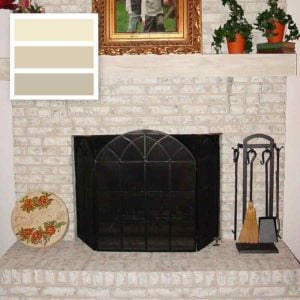







If you have a wood burning fireplace, you can probably install gas logs in it. If you don't have a wood burning fireplace, you cannot install gas logs in it, with the exception of a few ventless fireboxes. Not sure if your fireplace is wood burning? If it is an unaltered masonry fireplace, it is a wood burning fireplace. If you have a prefab fireplace, check for the metal tag, which is usually near the opening of the firebox. This will have the manufacturer and model number and possibly the type of fuel it is made to burn. You can look up your fireplace to check if the fuel type isn't listed on the tag.
A ventless firebox is a freestanding unit that can be installed in almost any home. They are cheaper to install than vented fireboxes since they don't have to have a chimney or other venting system. Only burn ventless logs in a vent-free firebox. Check the metal tag near the opening of the firebox to see if it is vent free.
Propane and natural gas are essentially the same when it comes to gas logs. The key is ease. Do you have propane or natural gas in your home? Choose a gas log set that that will run on the fuel you already have connected to your home.
Most gas logs have four standard sizes: 18, 21, 24, and 30 inches. Lets say our firebox has opening width 28 inches and back width 22 inches. (1) There must be at least two inches free space on either side of the gas log set. (2) We should not install gas logs longer than the back width. This ensures that the logs have two inches of free space on either side even if the firebox gradually gets narrower as it gets deeper. For this fireplace, we would get a 21-inch set.
Every gas log set is built differently. Some have starters that you push to light the gas; others you have to light manually with a long match; others have pilot lights. Your set might come with a remote control that you can use to turn on the gas and start the fire. Following your manufacturer's instructions for lighting is your best bet.
Consider the following factors when choosing your gas logs:
Do you have a fireplace with a working flue? Then get vented logs.
Do you have a ventless firebox? Then get ventless logs.
Do you have natural gas in your home? Then get natural gas logs.
Do you have propane in your home? Then get propane gas logs.
Standard log sizes are 18, 21, 24, and 30 inches. Pick the appropriate size ensuring (1) there is a least two inches of free space on either side of the logs and (2) the length of the set is not greater than the back width of the fireplace.
Style is completely up to you. Our buying page makes it easy to filter by the factors above so you can focus on finding the perfect style for your home.
Is your current firebox approved for ventless logs? If not consider our vented log collection.
If your current firebox has a working flue, vented logs are perfect for you.
Vented gas logs aren't legal everywhere. Check your local fire codes to see if vented gas logs are legal for in your area.
We highly recommend getting a licensed plumber or HVAC professional to install your gas logs. Making the gas connection improperly is a fire hazard.
Measuring your firebox is super easy. You just need a tape measure. Check out our step-by-step measuring guide.
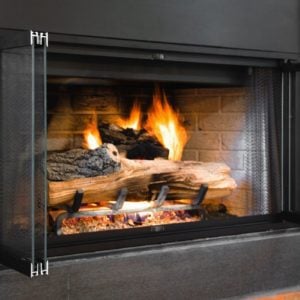
Vented gas logs are far more realistic than ventless gas logs. The flames of vented sets engulf the logs and are tall and deeply orange-yellow. Ventless gas logs have less realistic flames; they are shorter and less vividly colored.
Both vented and ventless gas logs usually come with glowing embers to recreate the look of a real fire even further.
Gas logs provide the same ambiance of a wood burning fireplace without the mess and hassle of storing and burning wood. They are more energy efficient than wood as well.
No need to take time to start a fire, your gas fire is just a match strike away. You don't have to wait for the fire to die down either. Just turn off the gas! With gas logs, there's no ash to clean up the next day, no need to create space to store logs, and just seconds required to start and stop the fire.
You deserve to enjoy your fireplace, and gas logs provide the beauty and warmth with none of the stress.