Free Shipping On Orders $199+ No-Hassle Returns Trusted By 130+ Happy Customers

How To Clean A Brick Fireplace: Step-By-Step

In this article, we’re going to cover everything you need to know on how to clean a brick fireplace. By the end of the steps below, you’ll have a fireplace you can be proud of.
A brick fireplace is a central feature of any room. It stands out as you walk in and helps place everything else together. The last thing you want is for your guests to walk into the room and see a fireplace full of soot and debris. Instead, you want a brick fireplace that always looks its best.

Like most other things in your home, a brick fireplace requires proper care and maintenance to keep it looking as sharp and good as new. This involves regular cleaning to remove the black soot and any other forms of dust and dirt.

Luckily, cleaning a brick fireplace isn’t a difficult job, and you can do it in just a few simple steps. Keep reading to find out the best ways on how to clean fireplace brick and how to keep it looking great all year round.

Materials and supplies you’ll need

Before you start cleaning your brick fireplace, you’ll need to gather the right materials and supplies. Ensure you get these exact items, as the wrong ones could damage your fireplace instead of cleaning it.

  • Rubber gloves: These are the best material gloves to protect your hands from the soot and any chemicals you may use
  • Dustpan and brush: Have a dustpan and brush ready to remove any debris and ashes inside and surrounding the fireplace
  • Plastic sheet: Some excess soot and dirt may appear when cleaning, so place have a plastic sheet to protect your floors and furniture
  • Chosen cleaning solution: There are several cleaning solutions you can use on your fireplace, so ensure you have your chosen one ready
  • Scrub brush: A scrub brush will scrub away any stubborn soot stains and dirt from the bricks
  • Sponges: You can use sponges to apply the cleaning solution and wipe away the grime from the surface
  • Bucket: Have a bucket ready for hot water or to mix your cleaning solution into
  • Protective eyewear and face mask: For guaranteed safety, these items will protect your eyes and lungs from soot and dust

Step-by-step guide to cleaning a brick fireplace

Once you have all your materials and supplies together, it’s time to start cleaning your fireplace. Follow these simple steps below:

1. Remove any dust, loose soot, and ashes

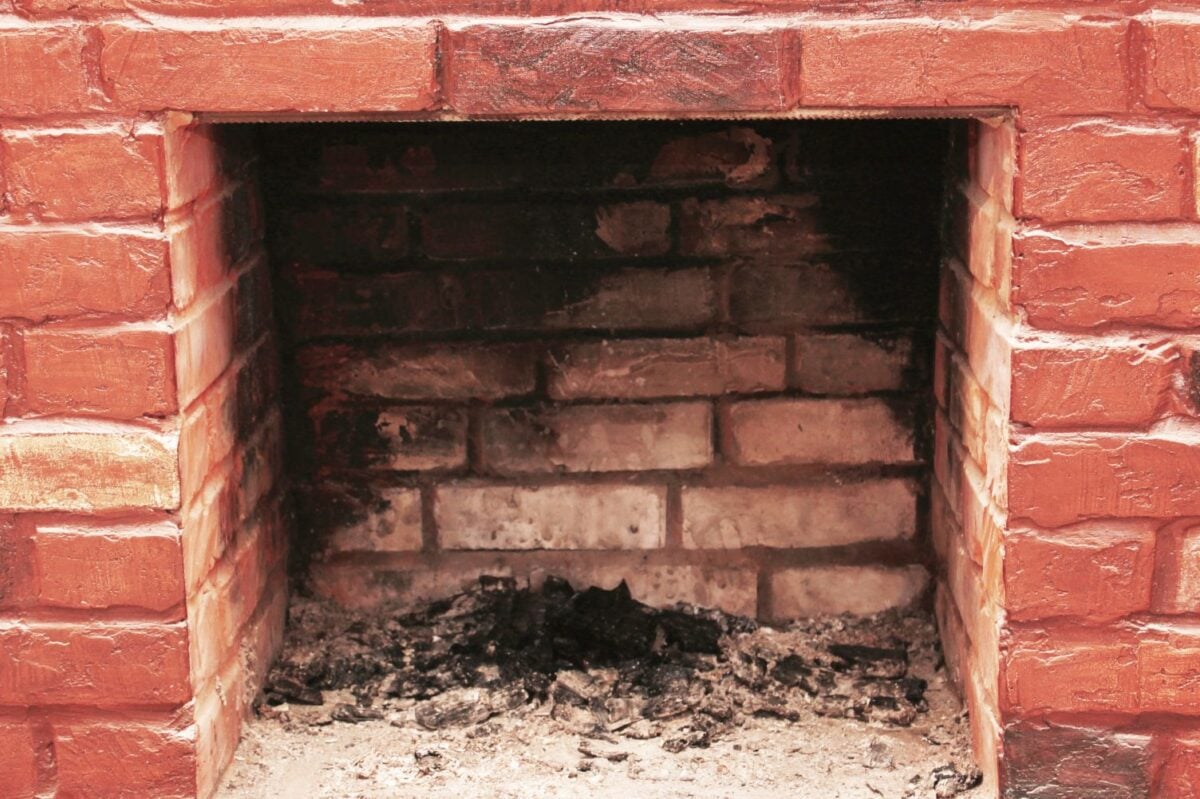
You need to prepare your brick fireplace before you start cleaning it. Make sure it hasn’t been lit for a while so there are no hot coals and it’s completely cold. You should then use your dustpan and brush to remove any excess dust, soot, and ashes.
2. Wipe your bricks with water

It’s now time to prepare your bricks. You want to ensure they are wet with water before you apply any cleaning solution. This is because the bricks will absorb the water as it is wiped on, which prevents your cleaning solution from doing the same, so it stays on the surface instead. The best way to wet your bricks is with one of your sponges or even a spray bottle if you have one handy.

3. Prepare your chosen cleaning solution

There’s no ‘one fits all’ cleaning solution when it comes to cleaning your fireplace, and it is all down to personal preference. However, the best one we have found is Brick Anew’s Brick and Stone Fireplace Cleaner. It is designed to eliminate the toughest residues, including smoke, soot, and creosote.

Other potential cleaning solutions include:

  • Dishwashing detergent
  • Vinegar
  • Scrubbing bubbles
  • Trisodium phosphate
  • Ammonia

4. Use your scrub brush

Apply your Brick Anew or alternative cleaning solution to your bricks. Brick Anew’s solution comes in an easy-to-use spray bottle, and you can also use an empty spray bottle to transfer your alternative. Work from top to bottom, applying to small areas at a time. Take your scrub brush and then scrub the surface in a circular motion. Keep going until the soot stains start to disappear, and the fireplace brick is clean.

5. Rinse and repeat

You don’t want to rinse all the fireplace bricks at once, so we suggested scrubbing in small sections. Once you’ve scrubbed one area, you can rinse it before you move to the next set of bricks. Use a wet sponge that has been dipped in clean water each time. Repeat this process until complete.

6. Look out for any remaining marks

You’ll now have a good idea of what your clean fireplace looks like. Hopefully, it looks good as new, but there may be a few stubborn marks that don’t seem to budge. If this is the case, you might want to mix a small bit of water with baking soda to make a solution. Apply it to the mark for a few minutes. You should then take a smaller scrub brush to go over the section and then rinse the area.
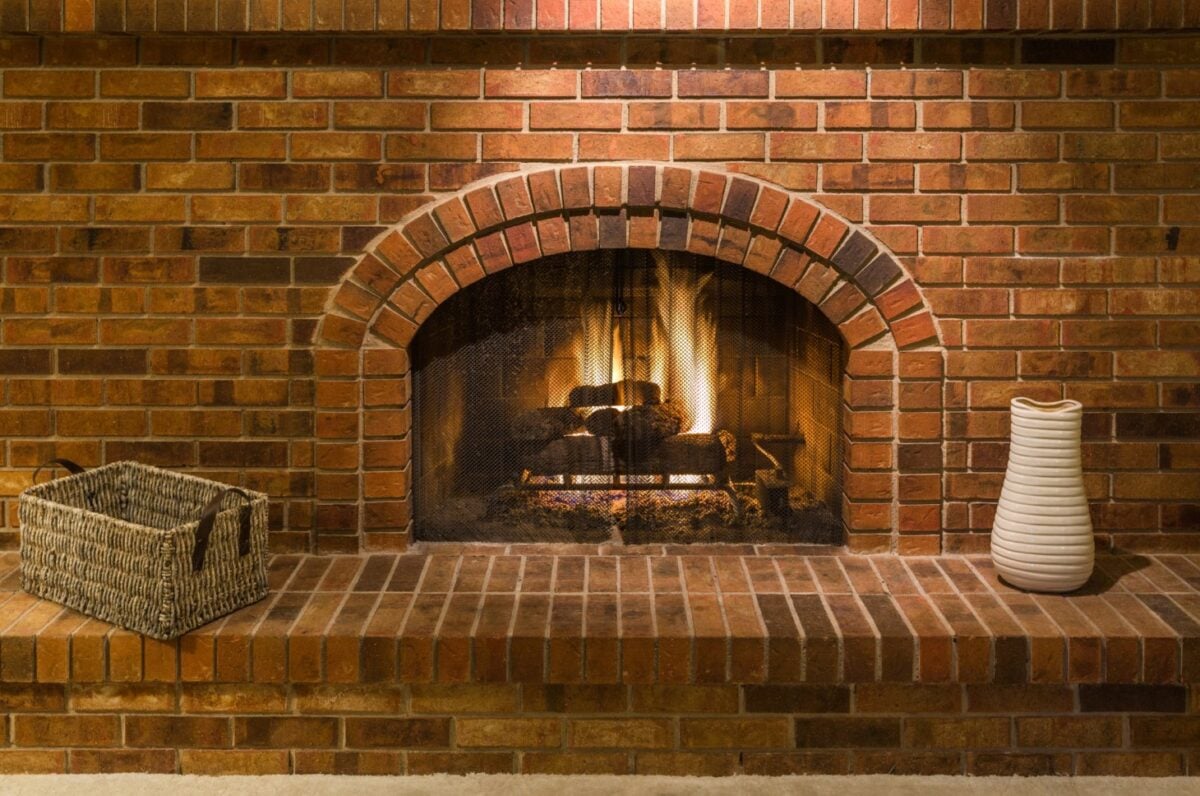
Cleaned Red Brick Fireplace

Frequently asked questions

Still have a couple of questions? We have the answers for you:

What is the best cleaner for a brick fireplace?

The best cleaner to clean fireplace brick, in our opinion, is the Brick Anew Brick and Stone Fireplace Cleaner. It is affordable, convenient, and known to remove even the toughest stains from your brick fireplace. It doesn’t contain any harmful acids, and it will help your fireplace look as good as new.

How do you remove black soot stains from a brick fireplace?

You can remove black soot the same way you remove any other dirt and grime from your brick fireplace. Ensure you follow the six steps listed above, starting by gathering all the correct equipment and supplies. Remember to protect your eyes and lungs by wearing protective gear, and repeat the process if you don’t see any results at first.

How often should I clean my brick fireplace?

There is no set answer to this question, as it will depend on how often you use your fireplace. If you use it regularly, you should try cleaning it every few months. However, if you only use it for special occasions, once a year will be sufficient.

Keep Your Chimney and Fireplace Creosote-Free

If you’re like me, you get excited about the possibility of a fireplace makeover, using your fireplace for different gatherings—the fun stuff! (more…)

Keeping a Cement Fireplace Hearth Clean

Fireplaces provide awesome moments with family and friends.  A little extra warmth on a chilly evening, beautiful flames, and the sounds and smells of wood burning create a special atmosphere.  A dirty fireplace takes away from that atmosphere.  Painting your firebox and keeping the fireplace clean are great ways to keep your fireplace looking fresh.

The hearth, however, is often forgotten.  Many fireplace hearths are cement so they take a little extra effort to clean.  SFGate provides great directions on how to clean your hearth and how to keep it that way!

Preparation

First things first, you have to prepare.  SFGate recommends spreading old coffee grounds over the ash and soot to keep the dust down.  Cover the walls around the fireplace by taping up old newspapers or another lightweight material.  Cover the floor with a tarp or even newspapers.  If you’re going to put newspaper on the floor, secure them in place so they won’t blow away!

Open and close the damper a few times to release creosote and ash.  Sweep up all loose soil and seal it off.  You can use a metal ash can or a trash bag if you tie it off well and immediately throw it out.

Cleaning Methods and Supplies

Depending on how dirty your cement is, you can use one of three methods: oxygen bleach, trisodium phosphate, or muriatic acid.  In this article, I’ll give you an overview of each chemical and the supplies you’ll need to clean with it, head over to SFGate’s article How to Clean a Cement Fireplace Hearth for detailed cleaning instructions.how to clean your fireplace hearth

Oxygen Bleach: General Maintenance

For general maintenance, oxygen bleach will work very well.  Oxygen bleach is a powdered bleach found in laundry detergents like OxiClean.  Don’t let its familiarity fool you.  Make sure you’re taking proper safety precautions like wearing gloves and eye protection.

To clean with oxygen bleach, you’ll need:

  • about 1 cup oxygen bleach
  • two large buckets
  • a mixing stick
  • a stiff bristled brush
  • a sponge

Trisodium Phosphate: Tougher Stains

Trisodium phosphate, a white powder used for cleaning and as a food additive, is great for removing tough stains.  If oxygen bleach is general maintenance, trisodium phosphate is a deep clean.  Again, make sure you’re being careful to protect yourself and the non-cement surfaces in your home.To clean with trisodium phosphate, you’ll need:

  • 1 cup chlorine bleach
  • 6 tablespoons trisodium phosphate
  • two large buckets
  • a mixing stick
  • a stiff bristled brush
  • a sponge

Muriatic Acid: Burnt-In Stains

Muriatic acid, a less pure version of hydrochloric acid, is very powerful, and not just for cement cleaning.  Even brief contact can burn skin, and breathing in the fumes can burn the lining of the nose and lungs.  Only use  muriatic acid as a last resort.  If you are going to use it, I strongly recommend reading through Bob Villa’s muriatic acid safety article.To clean with muriatic acid, you’ll need:

  • safety supplies including acid-resistant gloves, thick clothing to cover all exposed skin, eye and face protection, and a respirator
  • about 1 cup muriatic acid
  • two buckets
  • a sponge
  • a wooden bristle brush with a long handle
  • a broom
  • proper disposal methods as listed on the container of acid

Conclusion

This article may be more intimidating than inspiring.  Cleaning cement is no easy task.  You’ll have to locate supplies, buy chemicals, and take protective measures.  Then the whole time you’re cleaning, you’ll be worrying about possibly ruining your walls or carpet or furniture.  If you take it one step at a time, the process doesn’t have to be terrible.

Don’t stress yourself by trying to complete the whole process all at once.  Take your time gathering the proper supplies and protective equipment.  Read up on different safety measures and methods for cleaning.  Most important, don’t start the cleaning process on a day where you have lots of things to do!  Pick a fairly free day so you won’t be rushed.  Take your time preparing the room so that nothing is in danger of getting dirty.  Tarps are especially nice for covering carpets and furniture; if water spills onto them, they won’t leech it onto the furniture they’re covering.

Before you start cleaning, have a plan.  Some of these processes are time sensitive.  If you want to have a break at some point, schedule it during a non time-sensitive part of the process.  Once you’re done, you may want to invest in a cement sealant to help prevent future stains.

Keep a positive spirit and ask us questions if you have any!  Happy cleaning!

Use Firebox Paint to Keep Your Fireplace Looking New

It’s that time of year again, people are thinking about updating their fireplaces, prepping fireplaces for the busy holiday season, and cleaning things up a bit before everyone heads indoors for the winter.

That’s why we want to share a top post from the Brick-Anew blog again, with tips for cleaning up your firebox, getting your fireplace cleaned up, and choosing the right firebox paint. If you’re planning on cleaning up your fire box for the season, then you’ll definitely want to check this post out!

“When you want to make your firebox look like new, a fresh coat of firebox paint is just what the doctor ordered. Before you start, you have to think about what kind of fireplace you have, and also be prepared to prep and clean the firebox for painting.”-Brick-Anew.com

Now get to work!

clean brick fireplace